← All audiences

For community centers

Built for everything happening under one roof.

Camps, classes, leagues, households, room bookings, and the money each of them brings in, on one set of records, in a building where all of it happens at once.

The reality

A Tuesday in your building.

Camp drop-off, a gym double-booked, a scholarship nobody wrote down, and a city report due Friday. The pieces are connected in your building, so they should be connected in your records.

  • Registration brings a lot of details together.

    Ages, capacity, waitlists, and who is paying what all land on one enrollment. Keeping them together means a parent sees the seats you actually have left, and staff work from a roster that is current rather than printed on Friday.

  • One household can have many schedules.

    Two children in different camps, a parent in the evening fitness class, and a grandparent who comes for lunch. Each has their own record and their own history, and the household is what ties them together.

  • Programs and rentals share the same rooms.

    Your team can review program and rental schedules together, check conflicts before confirming a booking, and keep the agreement and payment details with the reservation.

  • Partners and boards need reliable numbers.

    Participation, facility use, fee assistance, and other program records stay connected so staff can review them when preparing city, grant, or board reports.

Core workflows

Four places your team can start.

Every plan includes every module. These four support some of the most common work at a community center.

Programs & classes

Run classes, camps, and leagues in one place.

Set the dates, the cap, and the fee once, and let a weekly schedule generate the rest of the season. Families register online while staff work the roster, the waitlist, and attendance from the same record.

  • A weekly schedule that generates its own dates
  • Waitlists that promote the next name automatically
  • The fee set, overridden, or waived per registration
Facility rentals

Keep rental availability and program schedules together.

Manage birthday parties, meetings, fitness rentals, and community events. Staff can check availability, review conflicts, and track agreements, deposits, balances, and follow-up in one booking record.

  • Availability checked against programs, not just rentals
  • Weekly open hours per space, and closures that repeat
  • A deposit on the booking total

Family memberships & directory

One household. Everybody's own record.

Each person keeps their own programs, their own tier, and their own check-in history, while the household holds them together. A parent can be authorized to sign a child up and pay for it, one permission at a time, without being handed the child's whole record.

  • Access rules set per person, not per family
  • A parent signs up and pays for a named child
  • Emergency and pickup details kept as custom fields

Front desk

Give the front desk the context it needs.

Check members in by badge or name, tick the classes they came for, and see the custom fields your center decided matter, all on the screen the scan already opened.

  • Badge scan or name lookup
  • Day passes for renters, parents, and walk-ins
  • Today's classes on the same screen as the member

For your members and their families

One household, clear schedules.

Families can see programs, registrations, forms, and payments for the people in their household. Your team controls what each account can view or update.

  • Register kids and adults from one account
  • See the whole family's week in one view
  • Pay for each registration by card, at signup
  • Keep everyone's details right without ringing the desk
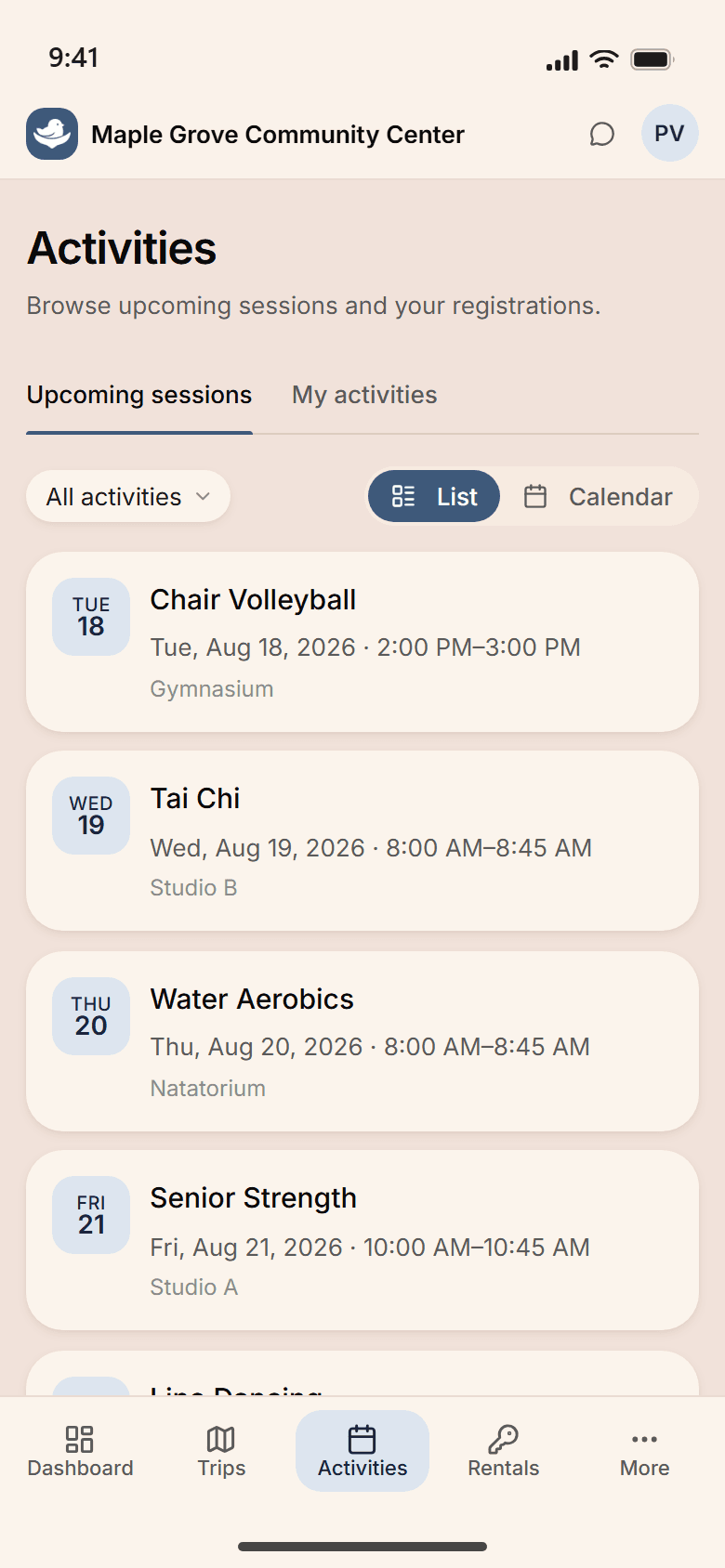
The NestPoint member portal on a phone, listing the week's activities — Chair Volleyball, Tai Chi, Water Aerobics, Senior Strength — each on its own row with the day and date alongside it.

How the work connects

One record, throughout the day.

Program, household, rental, and payment information stays connected as work moves from registration to reporting.

  1. Who is enrolled today, what is still owed on the gym booking, and which rooms are spoken for.

  2. A parent registers two children for camp from their phone and pays for both. The seats are gone from the count before anyone gets to the desk.

  3. A rental request comes in for Thursday night. The gym is already taken by the volleyball league, and the calendar says so before anyone promises it.

  4. At pickup, the household record shows who this child belongs to and who else is in the family. Your release policy is still your release policy.

  5. Participation, room use, and the fees you waived this quarter, in the packet the council asked for, without a weekend attached to it.

Run the whole calendar

Programs and rooms. One shared view.

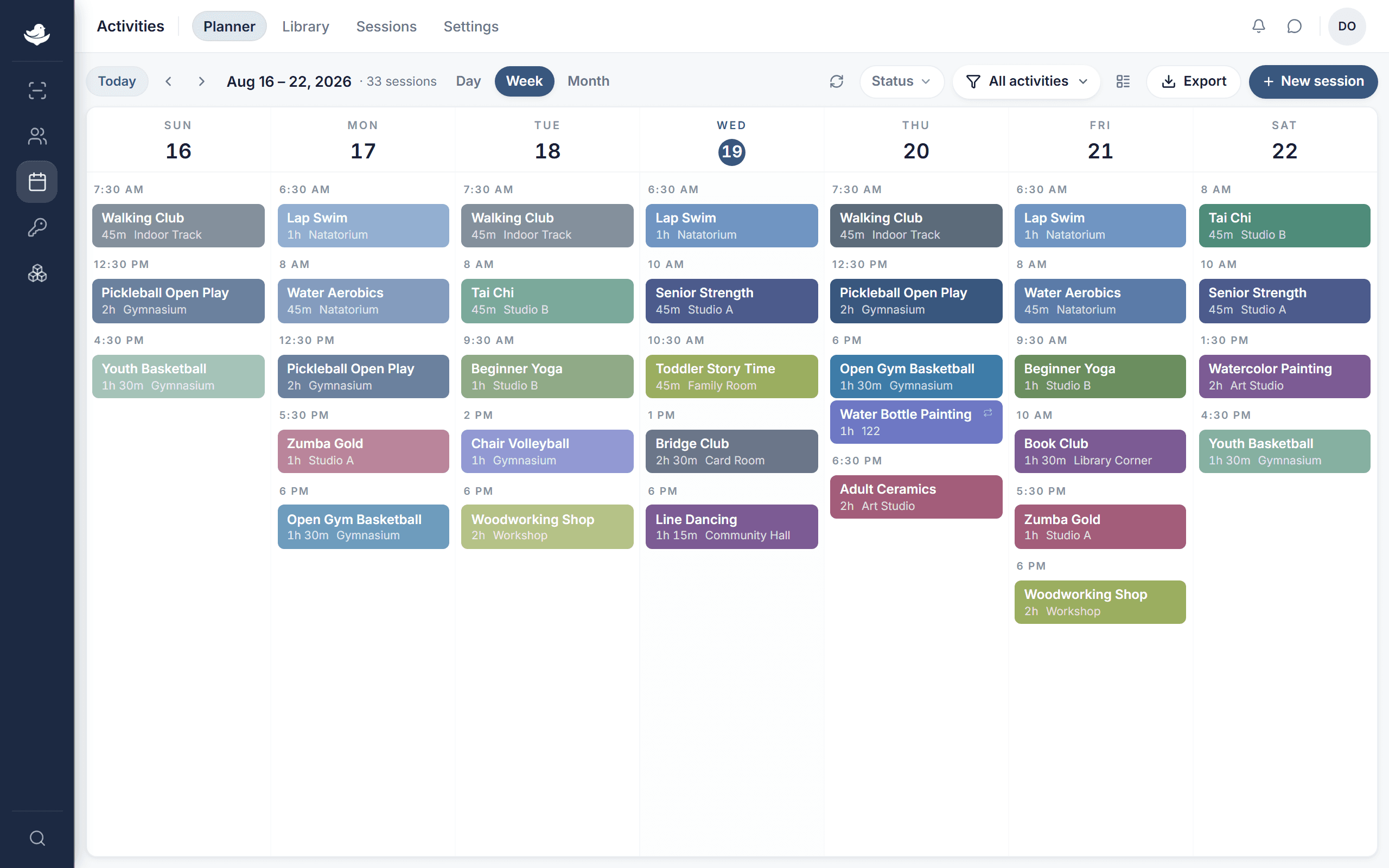
The Tuesday swim class and the Tuesday-night league booking sit on the same grid, so the gym cannot be promised twice. Move a class and the roster, the fees, and the note to families all move with it.

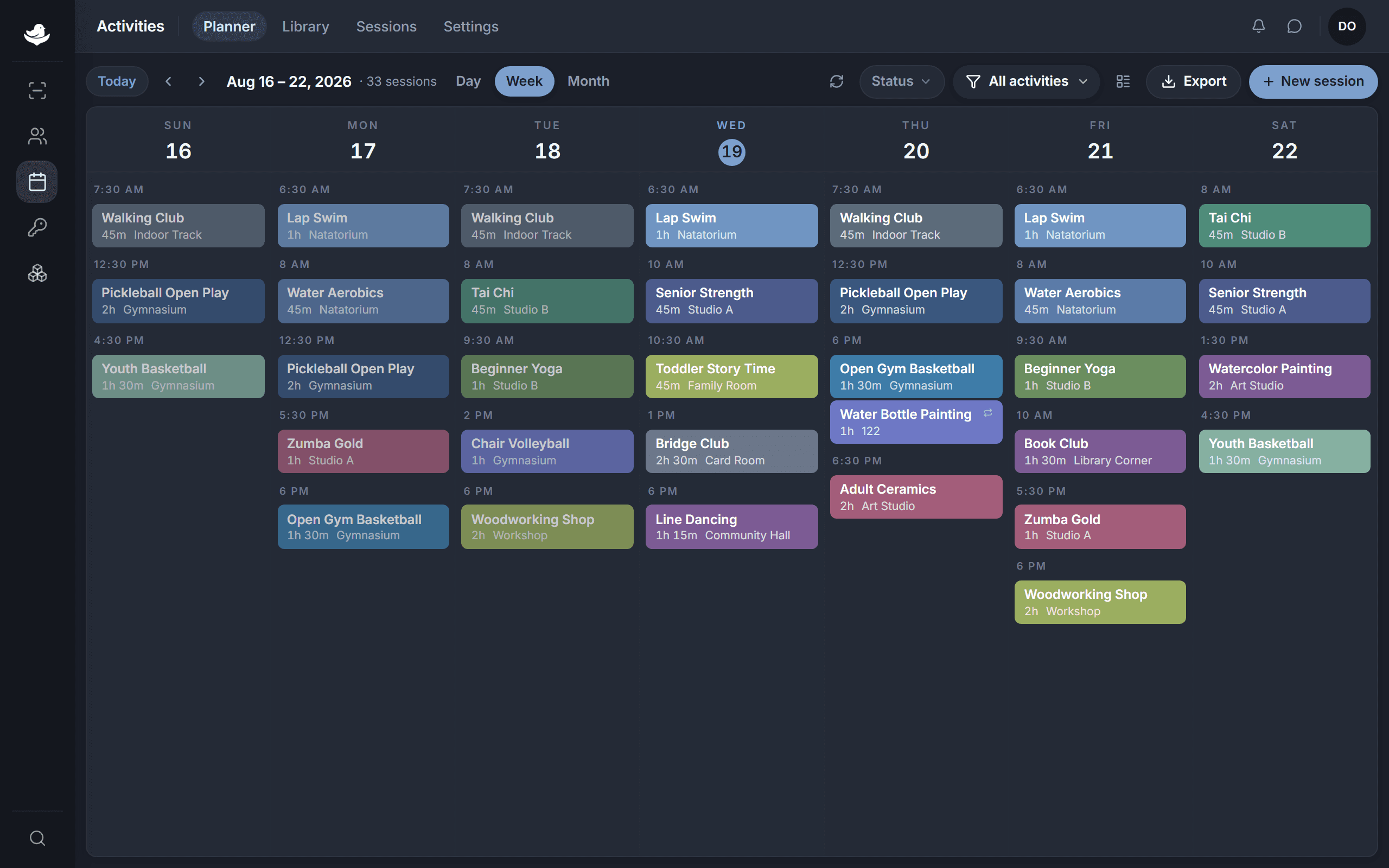
The NestPoint activities planner: a week grid of programs laid out by room and time, with conflicts and open capacity visible at a glance.The NestPoint activities planner: a week grid of programs laid out by room and time, with conflicts and open capacity visible at a glance.
  • Build the pattern once

    Every Tuesday and Thursday through August, built in one pass. Cancel the week of the Fourth without touching the other eleven.

  • The gym cannot be promised twice

    Programs and rentals share one room calendar, and an overlapping booking is refused when someone tries to make it.

  • Write to the families in that class

    The pool closes Thursday. The note goes to the parents of the children swimming Thursday, not to everyone on the list.

Customization

Your fee schedule. Your rooms. Your rules.

Every center prices differently, and the classes of member you recognize are not the ones they use across town. Set your fees, your tiers, your room policies, and the views your city asks for, around the rules your team already follows.

  • Tiers & household permissions

    Define the classes of member your center recognizes, what each may do, and how much of it. Then decide which adult in a household may sign a child up, pay for them, or cancel on their behalf, one action at a time.

  • Fee overrides & waived fees

    The class costs forty dollars. This family pays ten, and that one pays nothing. Staff set the amount on the registration, and the waived part stays on the ledger as its own line with a reason and a name on it.

  • Rooms, hours, and rates

    Each room, gym, field, and piece of equipment carries its own bookable hours, the dates it is closed, and how it is priced: by the hour, by the day, or a flat rate for the booking, with a deposit on top if you take one.

  • City & board report packets

    Build the numbers your city asks for once and save the view, then group the ones the board wants into a packet. Next quarter you run the packet instead of rebuilding four reports the night before.

Common questions

What community center teams ask us.

Camp sign-ups open at nine. By noon you have rosters.

Camp opens, families sign up over a weekend, and the household pricing holds. Registrations, payments, and rosters all land on the same record.

Card required. Cancel anytime.